EMERGENCY PREPAREDNESS, FOOD SUBSTITUTIONS, PANTRY COOKING & SELF RELIANCE
Never Let a Missing Ingredient Stop You Again
Out of eggs? No milk in the fridge? Halfway through a recipe only to discover you’re missing a key ingredient?
The Emergency Food Substitutions Guide offers practical, reliable alternatives to everyday ingredients so you can keep cooking with confidence using what you already have on hand.
Inside the guide, you’ll discover proven emergency food substitutions for eggs, dairy products, butter, oils, sweeteners, flour, spices, leavening agents, and pantry staples. You’ll learn what works, why it works, and how to adapt recipes without the stress, waste, or expense of unnecessary grocery trips.
Whether you’re building a more resilient pantry, preparing for food shortages, reducing food waste, saving money, or simply becoming a more confident cook, these practical ingredient substitutions and pantry swaps are skills you’ll use again and again.
Instant Digital Download • Practical Reference Guide • Lifetime Access

Emergency Pantry Essentials
Learn how to replace common ingredients using shelf stable foods and long lasting pantry staples that support everyday cooking and emergency preparedness.
Emergency Food Subsitutions
Master practical swaps for eggs, milk, butter, flour, sweeteners, oils, spices, and other kitchen essentials with easy to follow recommendations and ratios.
Self Reliance Through Food
Develop the confidence to cook, bake, and adapt recipes using what you already have on hand, reducing dependence on last minute shopping trips and supply disruptions.
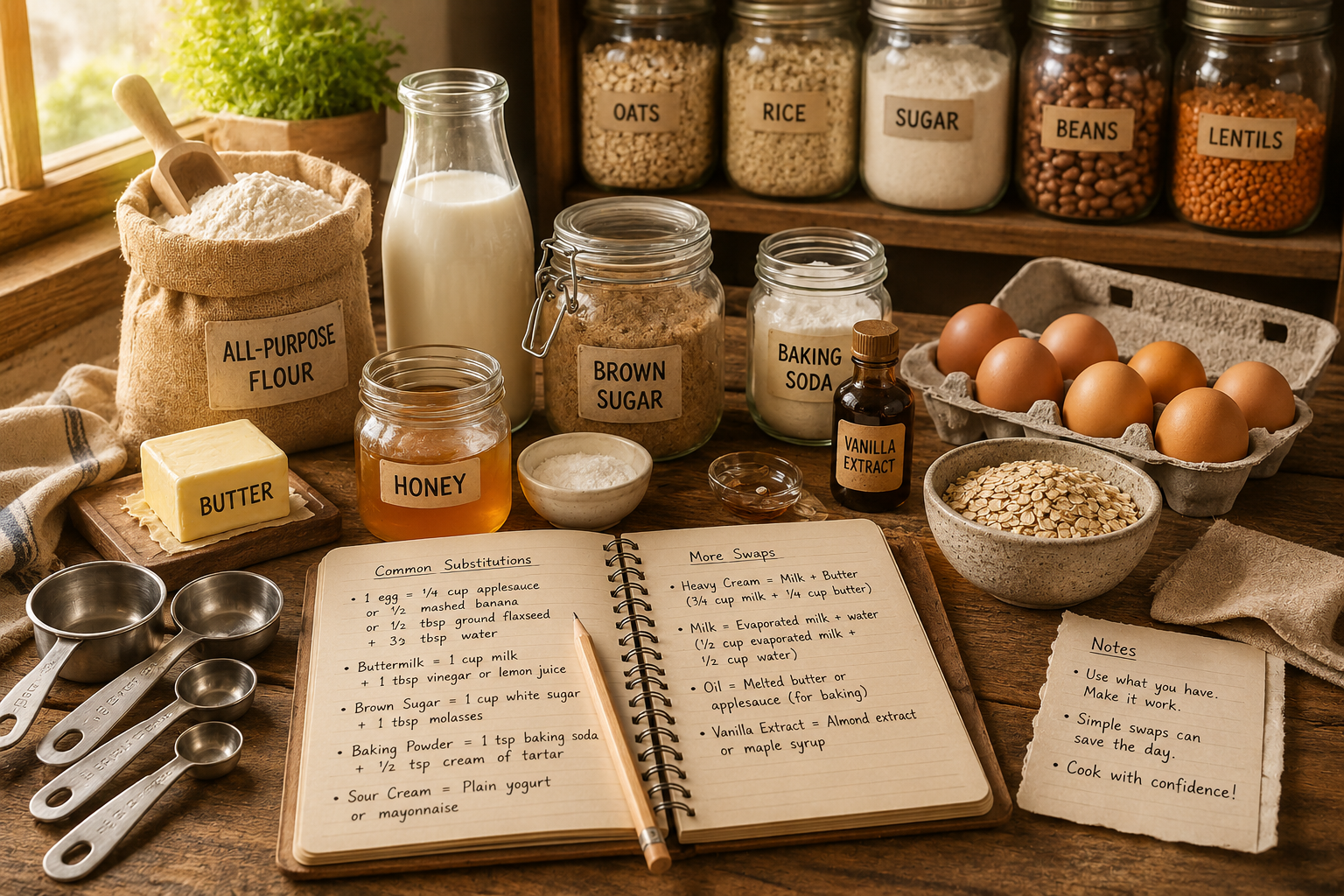
The Kitchen Skill Every Prepared Household Needs
Out of eggs? No milk in the fridge? Butter running low? Halfway through a recipe only to discover you’re missing a key ingredient?
It happens to every home cook.
The Emergency Food Substitutions Guide gives you practical, reliable alternatives for the ingredients you use most often. Whether you’re baking bread, preparing family meals, managing food allergies, stretching your grocery budget, or building a more resilient pantry, you’ll learn how to adapt with confidence using what you already have on hand.
Inside, you’ll discover proven substitutions for eggs, dairy products, butter, oils, sweeteners, flour, spices, leavening agents, and pantry staples. More importantly, you’ll learn why these substitutions work, helping you make smarter decisions in the kitchen rather than relying on guesswork.
A well-stocked pantry is valuable. Knowing how to use it is even more valuable.
Stop wasting time searching the internet for last-minute substitutions. Reduce food waste, save money, avoid unnecessary trips to the store, and gain the confidence to keep cooking no matter what’s missing from the recipe.
Because self reliance isn’t about having everything. It’s about knowing what to do with what you have.
Emergency Pantry Essentials
Learn how shelf stable foods, pantry basics, and common household ingredients can replace hard to find items and keep meals moving.
Emergency Food Substitutions
Discover practical swaps for eggs, milk, butter, flour, oils, sweeteners, spices, and other everyday kitchen essentials.
Baking Without the Stress
Master reliable substitutions for breads, cakes, cookies, muffins, and other baked goods when key ingredients aren’t available.
Save Money & Reduce Waste
Use ingredients more efficiently, prevent unnecessary food waste, and make the most of what you already have at home.
Kitchen Confidence & Self Reliance
Build the skills to adapt recipes, solve problems, and cook confidently without relying on a last-minute trip to the grocery store.
Frequently Asked Questions About Food Substitutions
Can I substitute eggs in baking?
Yes. Depending on the recipe, eggs can often be replaced with applesauce, yogurt, mashed banana, flaxseed mixtures, or commercial egg substitutes.
This guide explains which options work best and when to use them.
What can I use instead of milk?
Milk can often be replaced with water, powdered milk, evaporated milk, plant based alternatives, yogurt mixtures, or pantry staples already on hand. The guide includes practical ratios and recommendations.
What are the best pantry staples for emergency cooking?
Shelf stable foods such as flour, oats, rice, powdered milk, dried beans, baking ingredients, oils, and common seasonings provide the foundation for flexible meal preparation and emergency food substitutions.
How do food substitutions help reduce waste?
Knowing how to replace missing ingredients allows you to finish recipes, use what you already have, avoid unnecessary grocery trips, and reduce food waste.

Why You Need This Guide
Tired of not using recipes because you’re missing one ingredient?
Frustrated by last minute trips to the grocery store for a single item, only to leave with far more than you planned to buy?
Wish you knew how to make meals work with what you already have in your pantry?
You’re not alone.
Most people have experienced the same thing. A recipe calls for buttermilk, but there’s none in the fridge. You’re halfway through baking and discover you’re out of eggs. The flour container is nearly empty. What should be a simple meal suddenly becomes a problem.
Many recipes are more flexible than they seem. If you’re missing an ingredient, there’s often a good substitute already in your pantry or refrigerator.
This guide helps you replace common ingredients with confidence. You’ll learn simple substitutions for eggs, milk, butter, flour, oils, sweeteners, spices, and pantry staples so you can keep cooking, baking, and preparing meals without unnecessary stress.
The result is less food waste, fewer emergency grocery runs, greater confidence in the kitchen, and a more self reliant household.
Because knowing what to do with what you have is often more valuable than having everything you need.
The Cost of Not Knowing

We’ve all experienced it.
You’re halfway through a recipe when you realize you’re missing a key ingredient.
You stop preparing the meal. Dinner is delayed. Another trip to the grocery store becomes necessary.
Perfectly good ingredients go to waste because you don’t know what to replace the missing item with.
The Emergency Food Substitutions Guide solves that problem.
Instead of relying on last minute internet searches or guesswork, you’ll have practical, proven alternatives at your fingertips. You’ll learn how to adapt, improvise, and cook with confidence using what you already have.
Because self reliance isn’t about having everything.
It’s about knowing how to make the most of what you have.

About Kathleen Penner
Kathleen Penner is an educator, speaker, and lifelong advocate of practical self sufficiency. Through years of experience in food preservation, pantry management, emergency preparedness, and household resilience, she has helped thousands of people build confidence in the kitchen and create systems that work in real life.
Her approach goes beyond recipes. She teaches readers how to think about food storage, substitutions, meal building, and resource management so they can cook well regardless of what is available in the refrigerator, pantry, or grocery store.
In The Art of Shelf Stable Cooking, Kathleen combines practical kitchen knowledge with proven preparedness principles to help readers waste less, save money, build food security, and create nourishing meals from everyday pantry staples.