Shelf Stable Cooking, Pantry Meals, Food Storage & Prepared Kitchen Systems
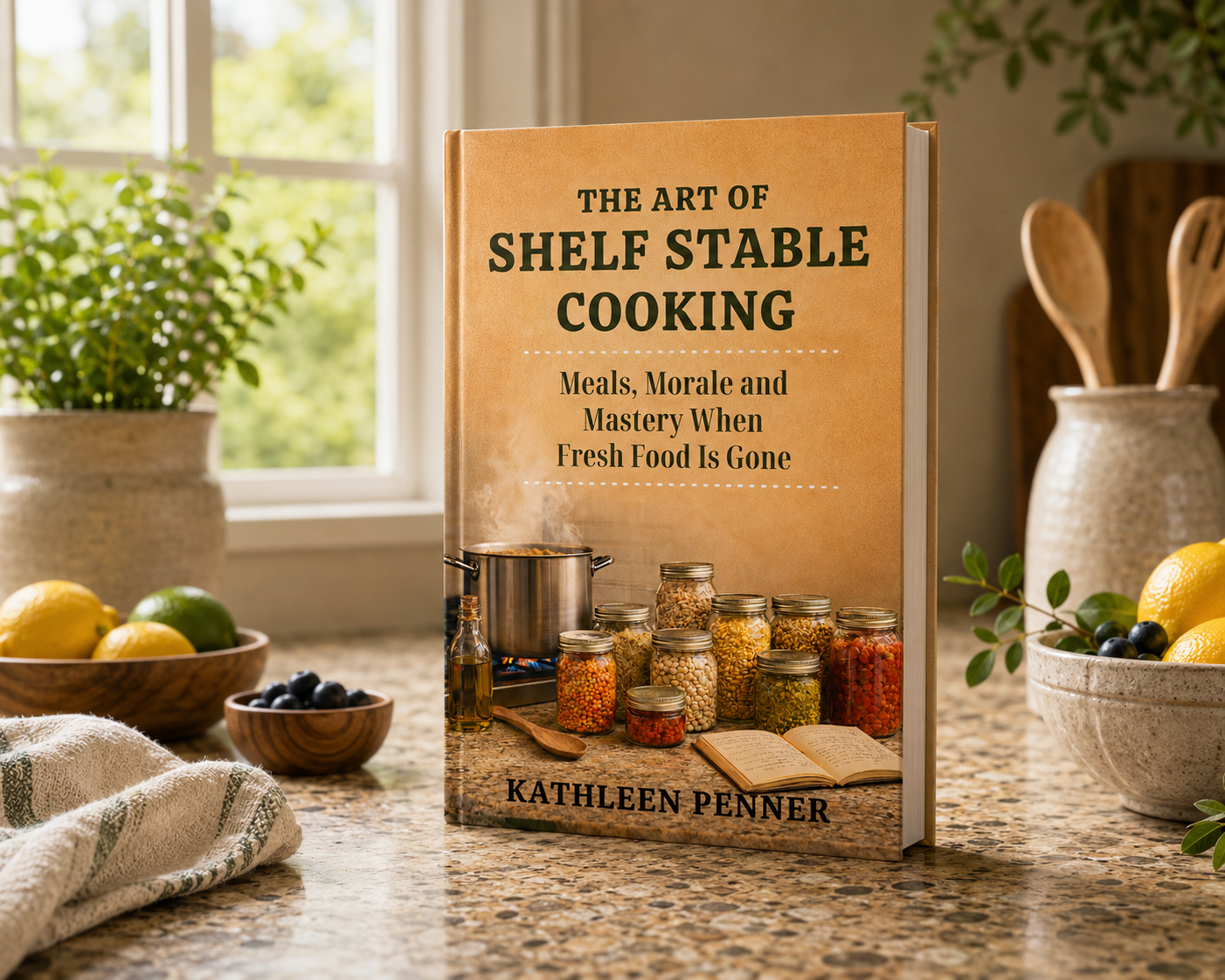
The Art of Shelf Stable Cooking
Build practical meals, pantry systems, and real food security using shelf stable ingredients you
already know and trust.
This book is designed for modern families, homesteaders, and preparedness-minded households. This guide helps you create a more resilient kitchen with everyday ingredients, long-term food storage strategies and realistic meal planning.

Real Pantry Meals
Cook practical meals from shelf stable ingredients you have at home.
Prepared Kitchen Systems
Build an organized pantry that supports your everyday life

Long Term Food Storage
Learn realistic food rotation and preparedness strategies you can use every day at home.
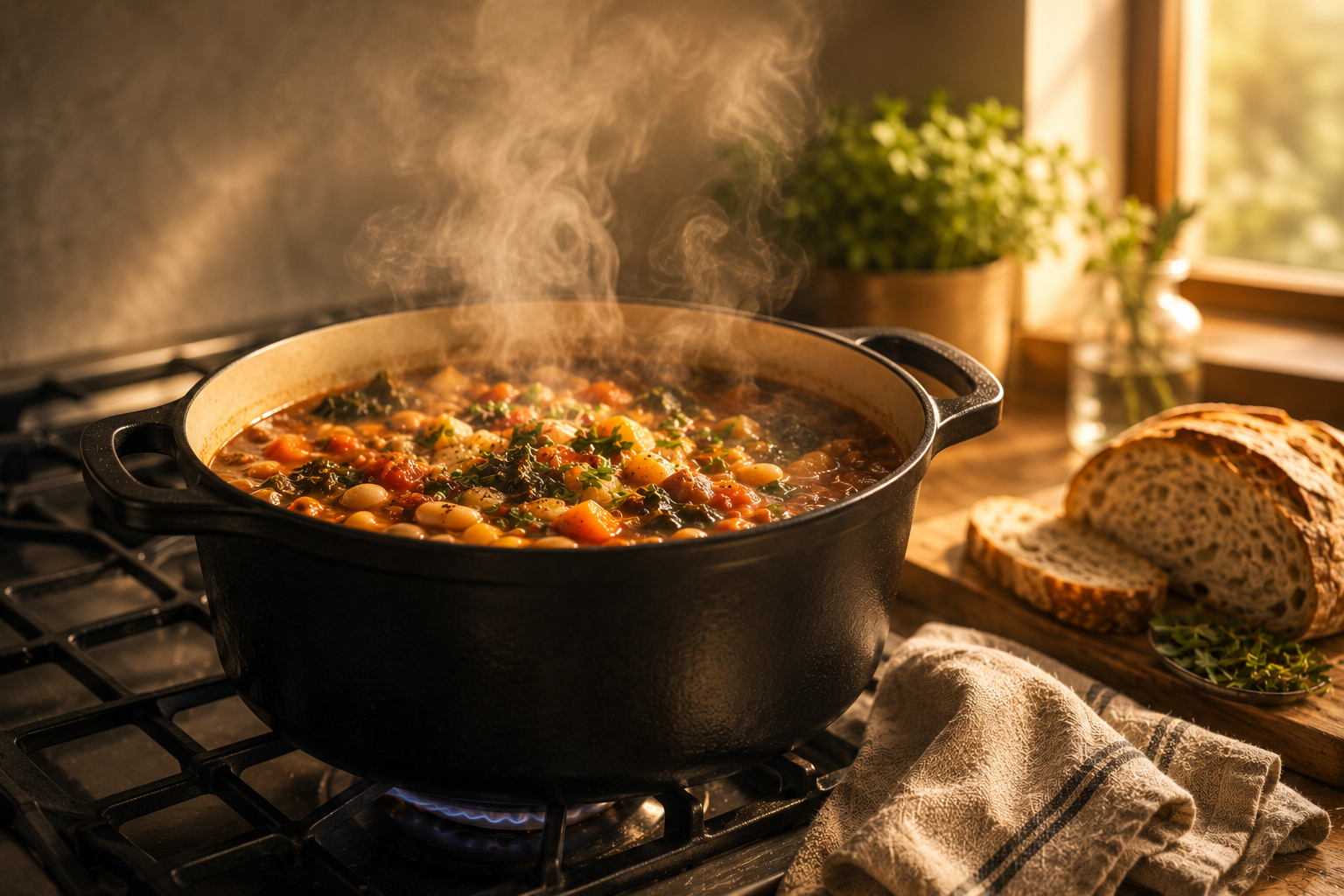
Discover the Confidence of Shelf Stable Cooking
Most people buy pantry staples without ever learning how to truly use them. The Art of Shelf Stable Cooking helps you turn shelf stable ingredients into practical meals, organized systems, and real peace of mind. Whether you want to reduce grocery stress, prepare for uncertain times, stretch your budget further, or simply build a more capable kitchen, you’ll learn how to create meals and routines that actually work in everyday life.
Pantry Organization and Systems
Build a pantry you can use with confidence, not one filled with forgotten ingredients and wasted food.
Real Meals from Shelf Stable Ingredients
Learn how to create satisfying breakfasts, lunches, dinners, soups, sides, and comfort meals using practical pantry staples.
Preparedness Without Fear or Extremes
Create food security and kitchen resilience in a realistic, balanced way that supports normal daily life.
Stretch Your Grocery Budget Further
Use smarter pantry systems, rotation methods, and shelf stable ingredients to reduce waste and make food go further.
Cooking When Fresh Food Isn’t Available
Gain practical skills for disruptions, storms, shortages, busy seasons, or simply fewer grocery trips.
Build a Kitchen That Supports Your Family
Create routines, systems, and meals that reduce stress and help your household feel more prepared and capable.
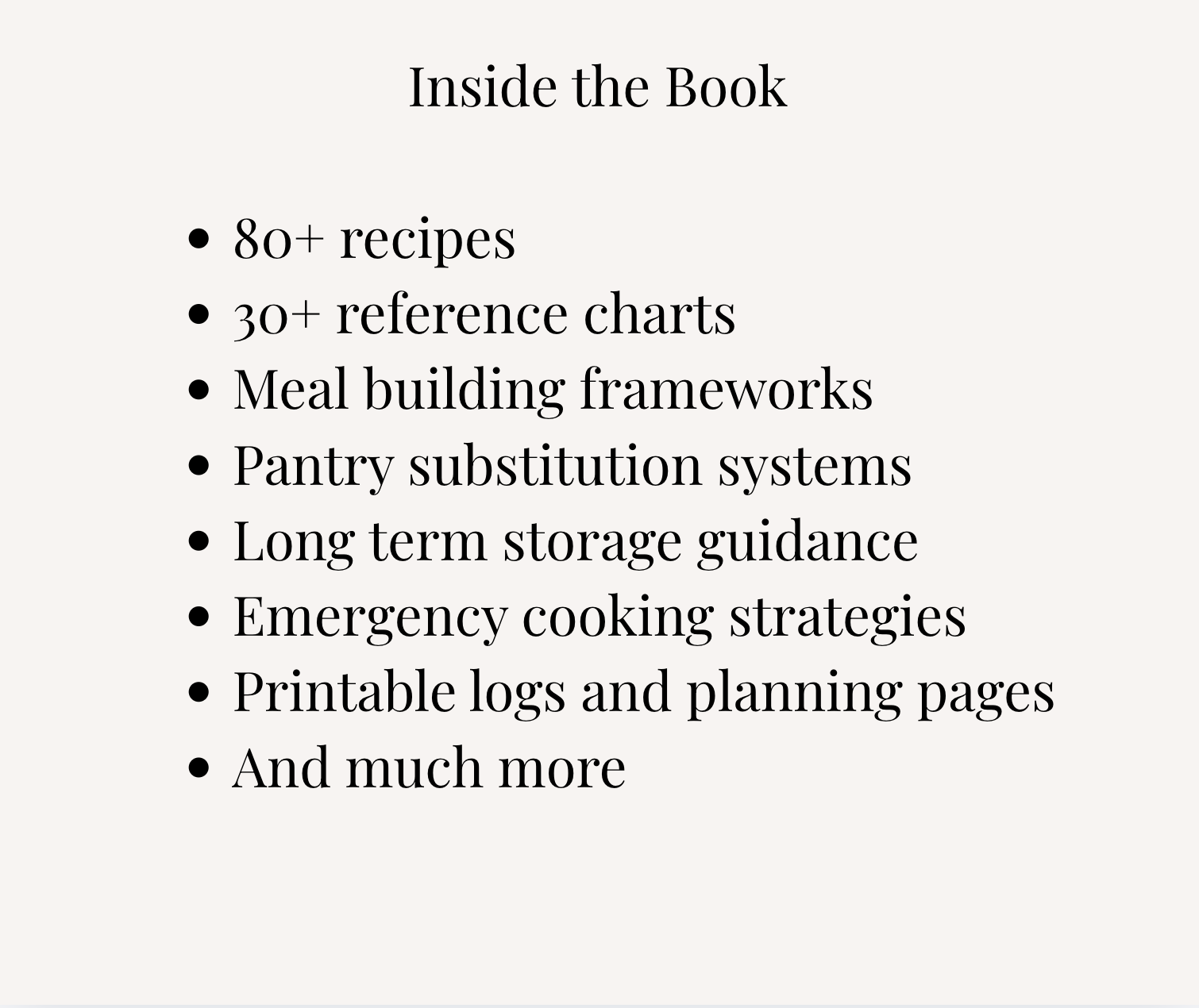
Inside the Book
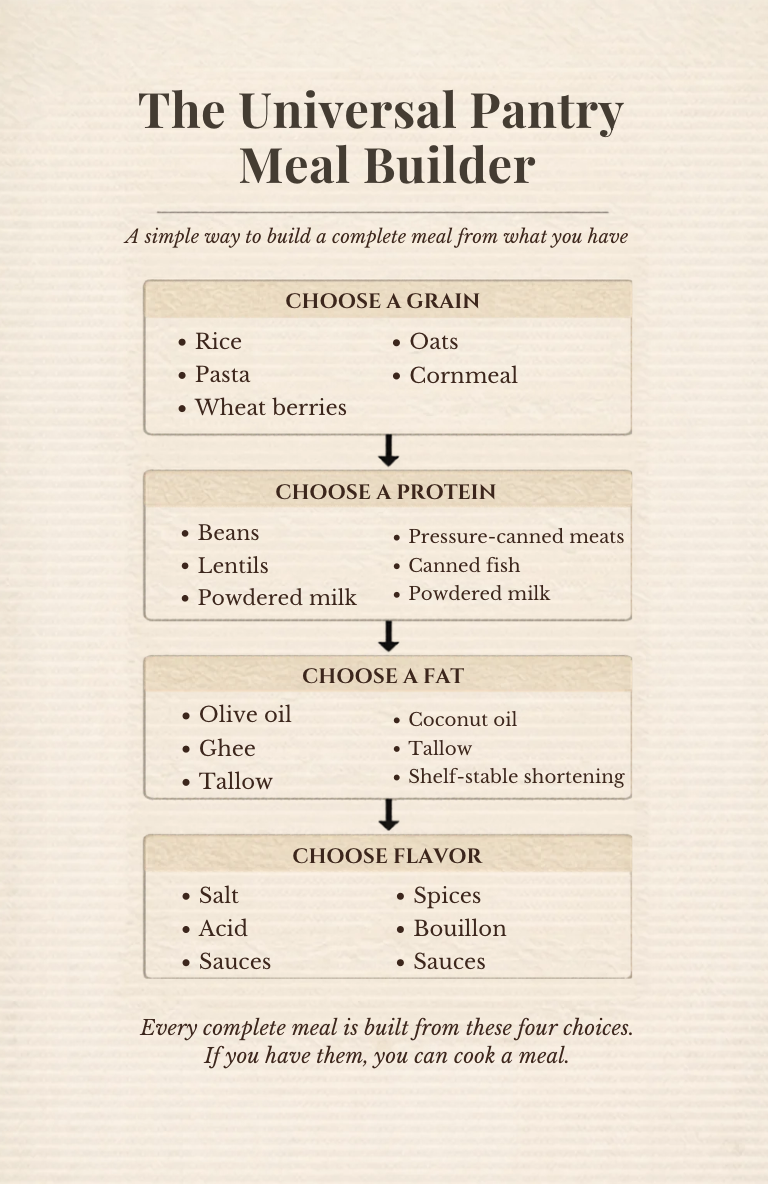
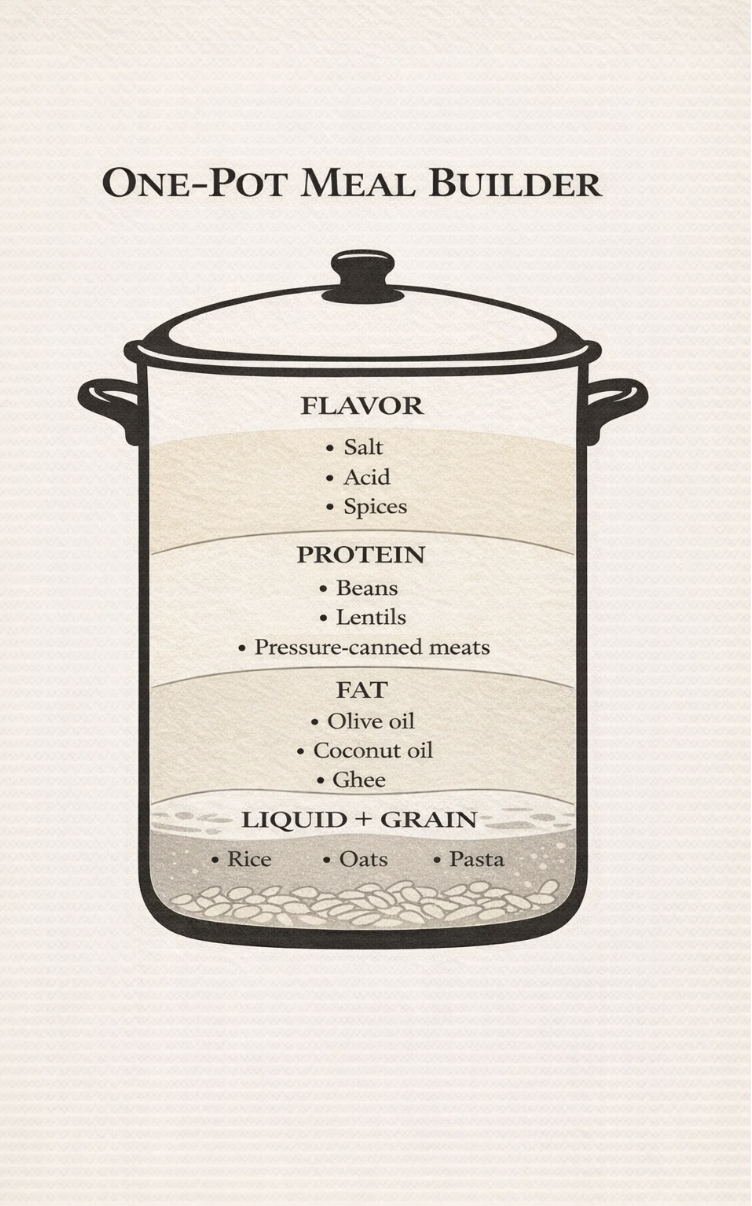
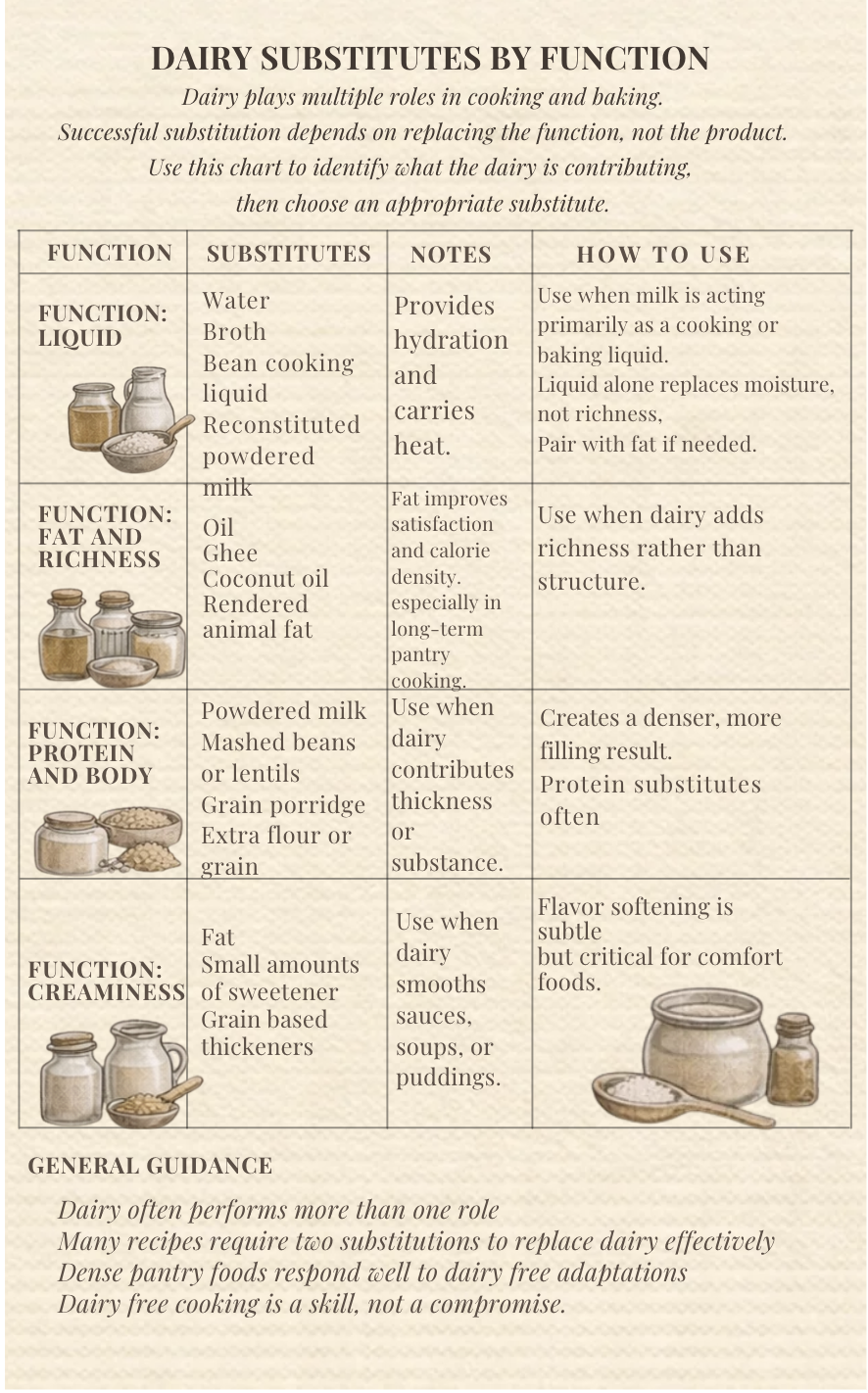
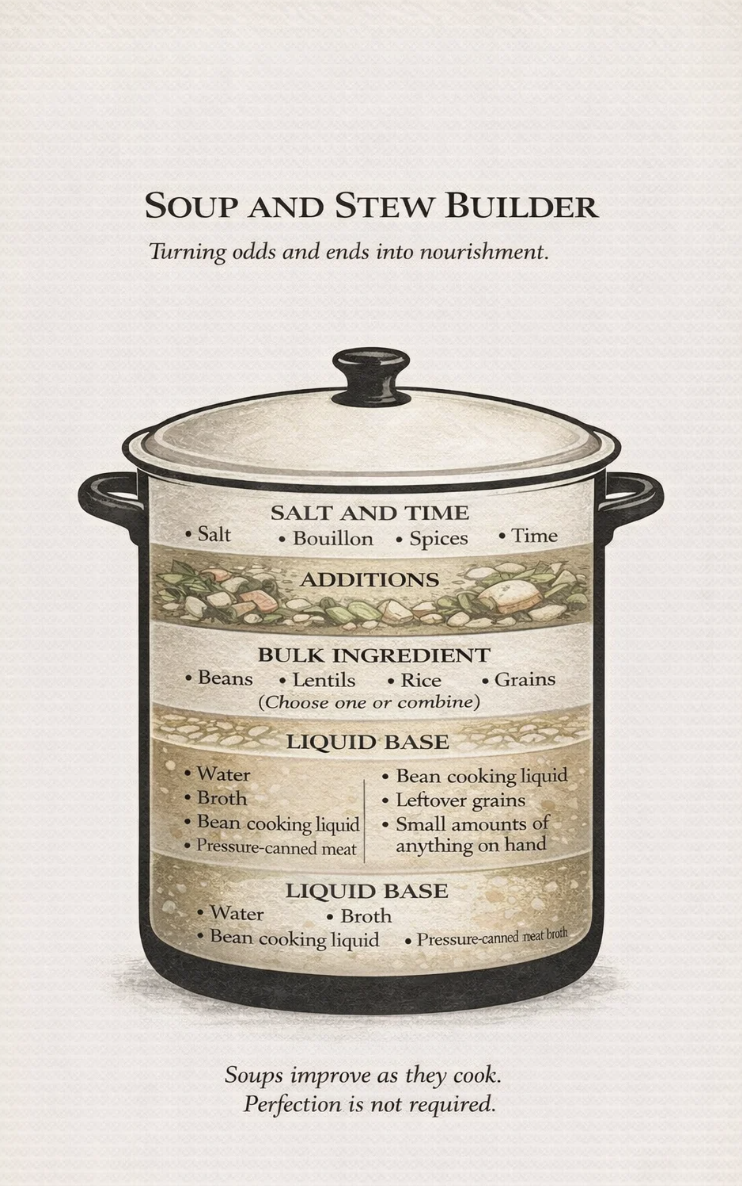
These images offer a glimpse inside the book. You’ll find practical frameworks, substitution guides, meal builders, and reference charts that make this more than a cookbook. These visual tools help you build meals from what you have, adapt recipes with confidence, reduce waste, and cook from your pantry, whether you’re preparing for everyday life or unexpected disruptions.
This is only a small sample of the recipes, systems, charts, and kitchen resources included throughout the book.
Chapter Previews
This is more than a pantry cookbook.
It is a complete, practical system for building meals, organizing food storage, adapting recipes, stretching ingredients, and cooking confidently from what you already have.
Inside, you’ll learn how to create satisfying meals from shelf stable ingredients, build flavor without relying on fresh foods, understand substitutions intuitively, and organize a pantry that supports both everyday life and emergency readiness.
From one pot meals and comfort foods to low fuel cooking, meal frameworks, substitution systems, and long term storage strategies, this book is designed to become a working kitchen reference you return to again and again.
Part 1 The Philosphy of Pantry Abundance

In part 1 you will learn the core principles behind pantry organization, shelf stable cooking, food security, and long term food storage. This section will help you build a practical pantry system that supports everyday cooking, emergency preparedness, budget friendly meal planning, and greater confidence in feeding your family from the ingredients you already have.
① Chapter 1: The Philosophy of Pantry Abundance
Learn why a thoughtfully stocked pantry creates confidence, stability and everyday ease.
② Chapter 2: A Brief History of the Working Pantry
Discover how generations before us used practical pantry systems to feed families well.
③ Chapter 3: The Philosophy of Food Security
Explore realistic preparedness through nourishment, capability, and long-term resilience.
④ Chapter 4: From Storage to Skill
Turn stored ingredients into real meals with practical cooking knowledge and confidence.
⑤ Chapter 5: Designing Your Pantry for Real Life
Build a pantry system that supports your space, budget, cooking habits, and lifestyle.
Part 2: Building the Abundant Pantry
Part 2 focuses on building a well-stocked pantry with the shelf stable ingredients, food storage essentials, and pantry staples that form the foundation of practical everyday cooking.
You’ll learn how to select, store, and use canned foods, dried goods, dehydrated ingredients, cooking fats, herbs, spices, and specialty items to create flavorful meals while supporting food security, emergency preparedness, and long term pantry resilience.
⑥ Chapter 6: The Core Staples
Learn which shelf-stable ingredients create the strongest foundation for everyday meals and long-term resilience.
⑦ Chapter 7: Canned and Jarred Essentials
Discover the most practical canned and preserved foods to keep your pantry flexible, nourishing, and dependable.
⑧ Chapter 8: Dried and Dehydrated Foods
Explore lightweight, long-lasting ingredients that add nutrition, convenience, and versatility to your pantry.
⑨ Chapter 9: Fats for Survival and Flavour
Understand the critical role fats play in nourishment, cooking, energy, and satisfying meals.
⑩ Chapter 10: Flavor is Not Optional
Learn how herbs, spices, sauces, and seasonings transform basic ingredients into comforting meals people actually want to eat.
⑪ Chapter 11: Special Considerations
Navigate dietary needs, allergies, storage limitations, and realistic preparedness challenges with confidence.
Part 3: Starting Recipes for your Abundant Pantry
Part 3 combines foundational recipes, practical kitchen skills, and adaptable cooking methods designed to help you confidently build meals from shelf stable ingredients.
⑫ Chapter 12: How to Cook Without a Fridge
Learn practical cooking methods for times without refrigeration, fresh groceries, or reliable power.
⑬ Chapter 13: Water, Heat and Fuel Awareness
Understand how fuel, water, and cooking methods shape a capable and resilient kitchen.
⑭ Chapter 14: Soup, Stew and One Pot Meals
Create hearty, adaptable meals that maximize nourishment, flavor, and pantry flexibility.
⑮ Chapter 15: Grains as a Foundation
Discover how rice, oats, pasta, and grains become the backbone of practical pantry cooking.
⑯ Chapter 16: Beans, Lentils and Legumes
Build affordable, protein-rich meals using versatile shelf stable staples.
⑰ Chapter 17 : Baking Without a Store
Learn practical baking methods using long-lasting pantry ingredients and foundational techniques.
⑱ Chapter 18: Comfort Foods Matter
Explore why familiar, satisfying meals play an important role in morale, routine, and emotional well-being.
Part 4: Cooking When Fresh Food is Gone
Part 4 includes 45 practical pantry meals designed to build upon your foundational cooking skills and transform shelf stable ingredients into hearty soups, one pot meals, skillet dishes, breads, stews, comfort foods, and adaptable everyday recipes.
Learn how to create satisfying meals from grains, beans, lentils, pasta, broth, canned ingredients, and pantry staples while reducing waste and stretching ingredients further.
The Leftover Transformation Log teaches you how to repurpose prepared meals into entirely new dishes, helping you create more variety, flexibility, and food security from the ingredients you already have.
Because food security is not just about storage. It is about knowing how to feed yourself well with what you have.
Part 5: The Art of Subsitution
In part 5, you will learn how to adapt recipes, replace missing ingredients, work around limitations, and build real confidence in the kitchen using practical pantry knowledge and flexible cooking skills.
⑲ Chapter 19: The Art of Substitution
Master practical ingredient substitutions that help you cook confidently with what you already have.
⑳ Chapter 20: Cooking for Allergies and Restrictions
Learn realistic pantry cooking strategies for gluten-free, dairy-free, egg-free, and allergy-conscious households.
㉑ Chapter 21: Fixing Foods When It Goes Wrong
Discover how to rescue bland, burnt, thin, thick, dry, or unbalanced meals using simple corrective techniques.
㉒ Chapter 22: Teaching Others to Cook from the Pantry
Pass practical pantry cooking skills to children, partners, and future generations through simple systems and confidence-building methods.
Part 6: Baking, Comfort, and Morale Foods
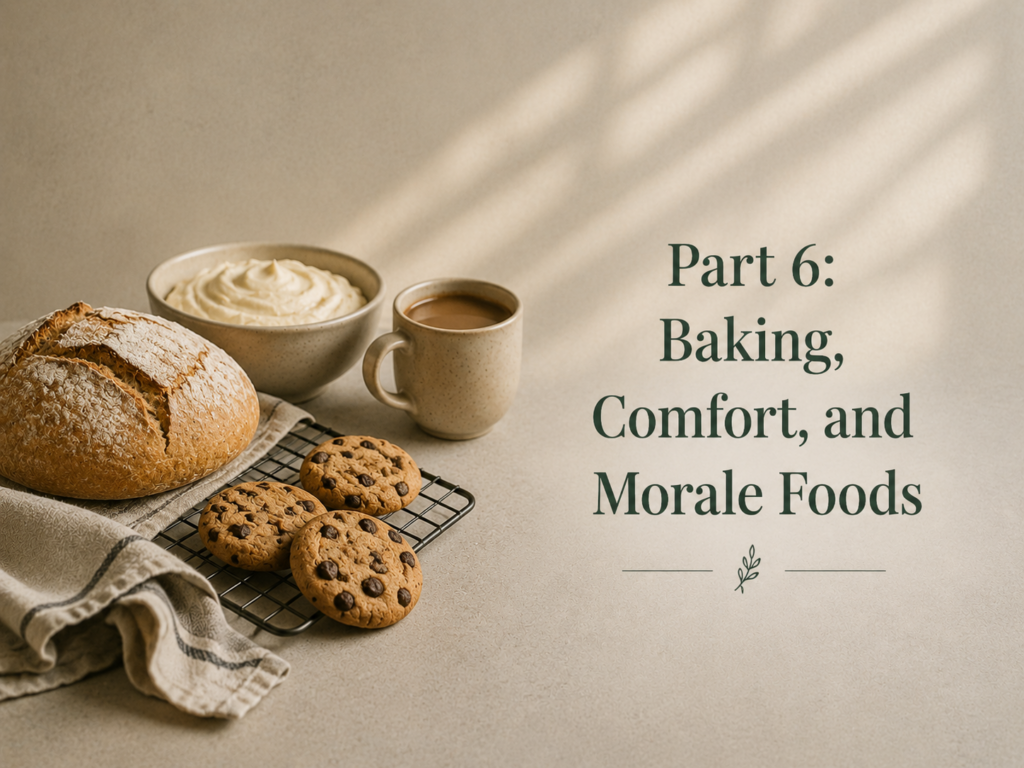
Part 6 includes 18 comforting pantry-based recipes designed to bring warmth, familiarity, and emotional nourishment during difficult seasons, stressful times, or everyday life. From simple baked goods to hearty comfort meals, these recipes help transform shelf stable ingredients into foods that support both body and morale.
Because comfort is not a luxury in difficult times. It is part of resilience.
Part 7: Substitution, Adaptation, and Skill Mastery
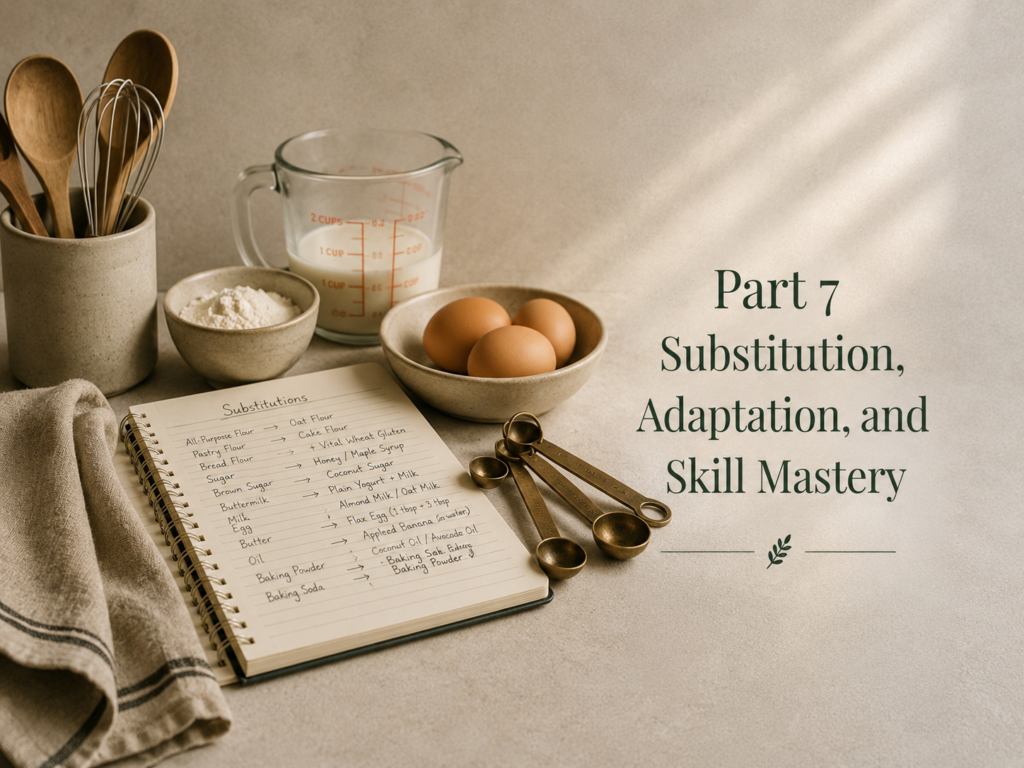
In part 7 you will learn how to confidently adapt pantry recipes for dietary restrictions, missing ingredients, and changing circumstances using practical charts, foundational techniques, and flexible cooking systems.
This section includes substitution charts, adaptable recipes, and practical guides designed to help you cook gluten-free, dairy-free, and egg-free meals without sacrificing flavor, nutrition or simplicity.
Part 8: Long-Term Pantry Storage
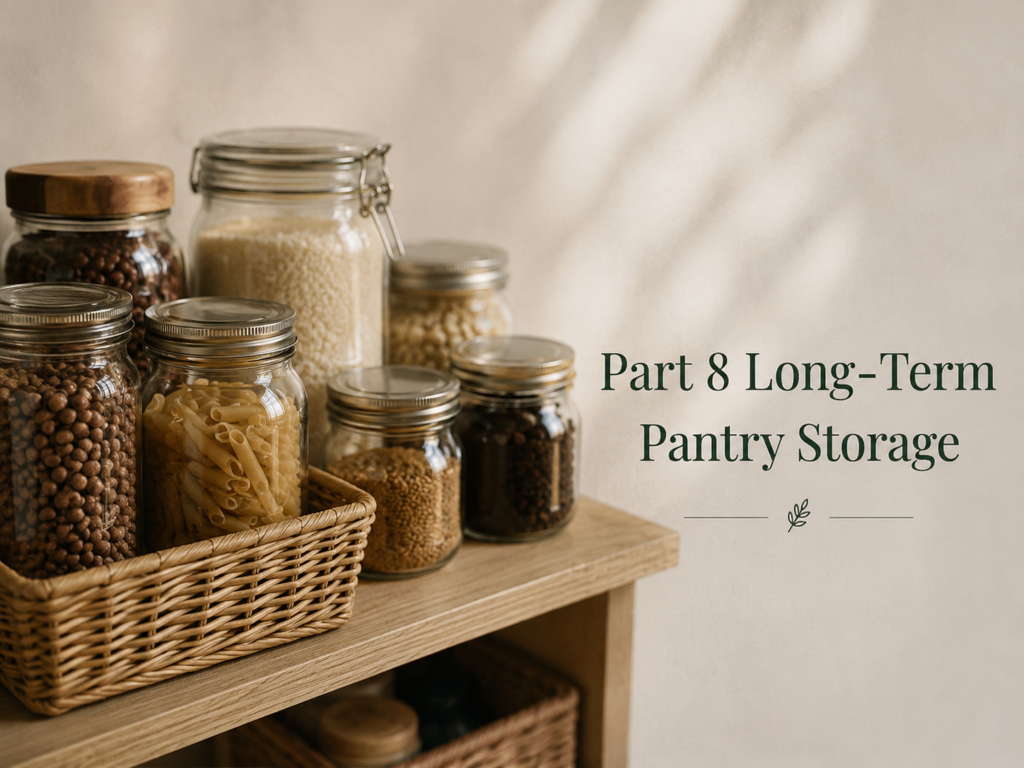
Part 8 teaches you how to build a pantry that works in real life, through practical storage systems, rotation strategies, fuel awareness, emergency planning, and long-term food management without waste or overwhelm.
㉓ Chapter 23: Rotation Without Burnout
Learn realistic pantry rotation systems that prevent waste while keeping your food storage practical and sustainable.
㉔ Chapter 24: Emergency Scenarios
Understand how cooking, food storage, and meal planning change during power outages, shortages, financial hardship, and extended emergencies.
㉕ Chapter 25: Pantry Abundance on a Budget
Build a resilient pantry over time using practical budgeting strategies, phased purchasing, and high value staple foods.
㉖ Chapter 26: From Pantry to Practice
Turn knowledge into confidence by learning how to use your pantry regularly before you truly need it.
Reference Chart:
Grain to Water Ratios
Quick reference cooking ratios for rice, oats, cornmeal, barley, wheat berries, pasta, and more.
Reference Chart:
Basic Bean Cooking Times
Simple cooking timelines for common beans, lentils, split peas, and legumes.
Reference Chart:
Low Fuel Bean Cooking
Methods for reducing fuel use through soaking, retained heat cooking, pressure cooking, and thermal methods.
Quick Reference Guide:
Water Conservation Comparison
Compare cooking methods and ingredients based on water usage and efficiency.
Quick Reference Guide:
At a Glance Grain and Bean Pairings
Simple combinations that improve flavor, nutrition, texture, and meal variety.
Part 9: Reference Guides and Practical Use
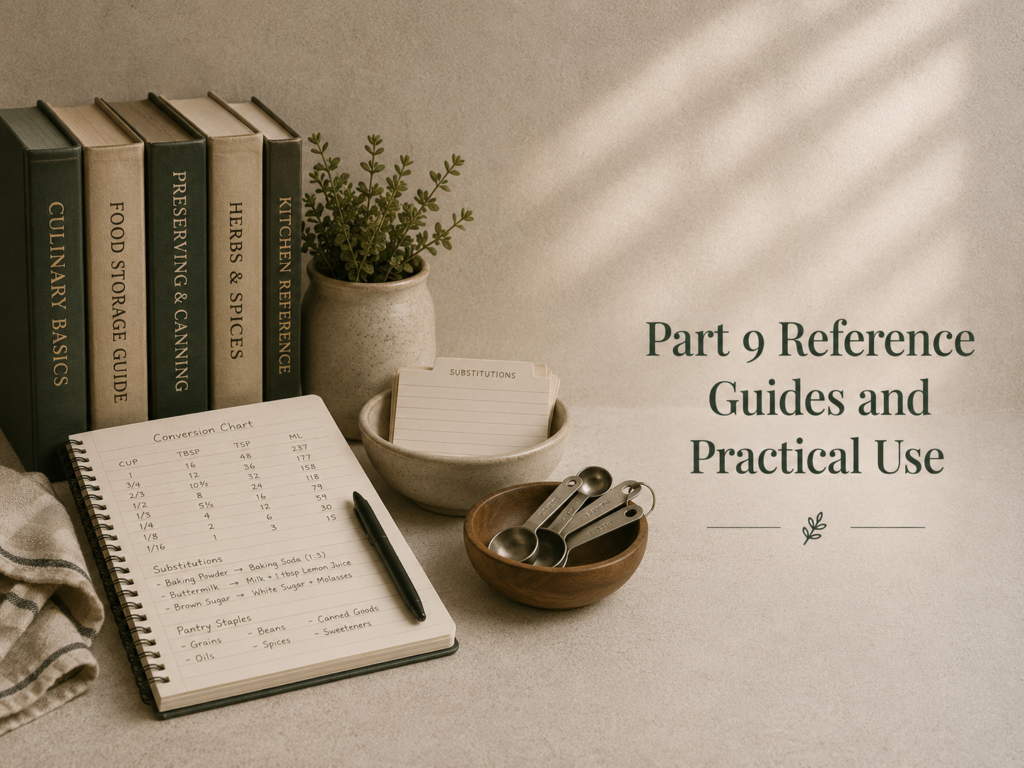
Part 9 includes over 25 practical reference charts, cooking frameworks, substitution guides, pantry systems, and meal building tools designed to serve as a permanent kitchen resource for both everyday cooking and emergency preparedness.
• The Universal Pantry Meal Builder
• How a Meal Comes Together
• Texture Balance Framework
• Morale and Comfort Food Framework
• Flavor Building Fundamentals
• Stretching Meals and Leftovers
• The One Pot Meal Builder
• Soup and Stew Builder
• Stretch and Extend Framework
• Low Fuel Meal Builder
• Heat and Cooking Method Swaps
Substitution and Adaptation Guides:
• Liquid Swaps
• Fat Swaps
• Salt and Seasoning Swaps
• Acid Swaps
• Thickener Swaps
• Flour Swaps
• Egg Substitutions
• Dairy Substitutions
• Sweetener Swaps
• Umami Depth Builders
Flavor and Pantry Reference Systems:
• Shelf Stable Sauces
• Using Sauces Well
• The Function of Sauce in a Dish
• Common Spices and Their Best Uses
• Spice Uses by Function
Part 10: Putting it All Together & Kitchen Reflections
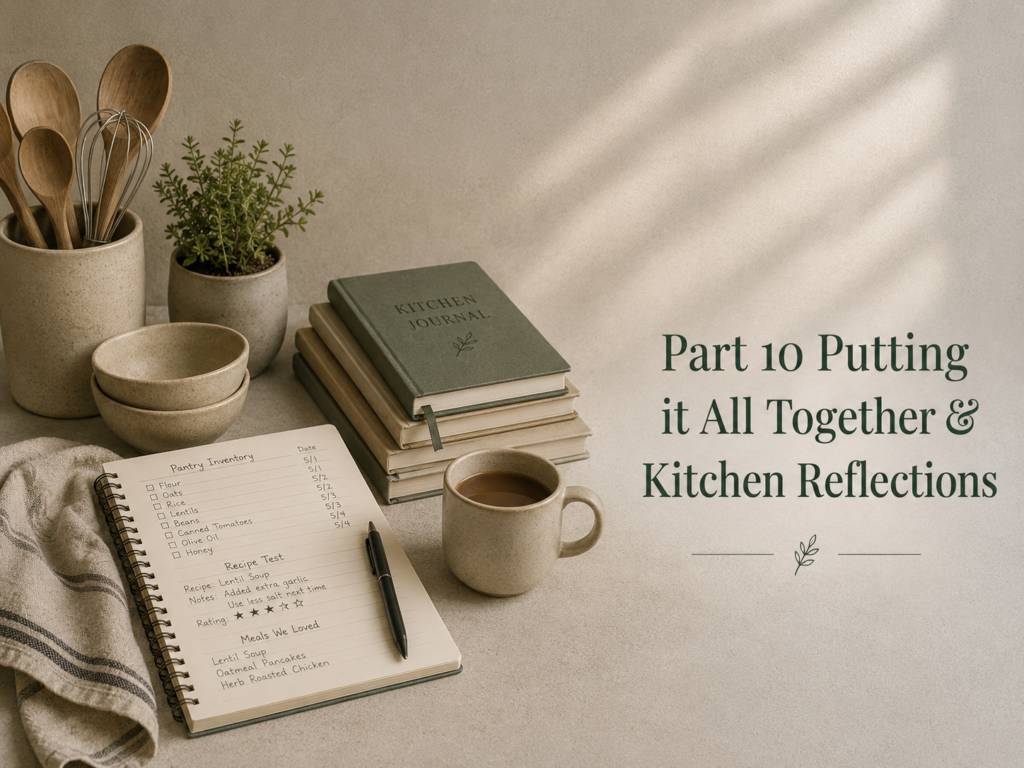
In part 10, you will turn your knowledge into practice through hands on pantry planning, meal tracking, substitution experimentation, and long term kitchen organization.
This final section includes practical worksheets, inventory systems, guided planning pages, and even reusable kitchen tools designed to help you build confidence, reduce waste, and create a pantry that truly supports everyday life.
Included Resources:
• Pantry Inventory Log
• Shelf Stable Ingredient Tracker
• Rotation and Expiry Log
• Substitution Notes and Personal Swaps
• Leftover Transformation Log
• Favorite Pantry Meal Templates
• Emergency Meal Planning Pages
• Pantry Restock Checklist
• Low Fuel Cooking Notes
• Water Usage Planning Pages
• Journaling Pages and Kitchen Reflections
What Our Readers Say
“This is the first preparedness book that actually feels usable in everyday life. I’ve already changed how I organize my pantry and cook weekly meals”
“The charts and meal frameworks alone are worth the price of the book. It teaches you how to think about cooking, not just follow recipes.”
“The Art of Shelf Stable Cooking is beautifully written, practical, and incredibly reassuring to have in the kitchen. I’ve gone back to it constantly since buying it.”

About Kathleen Penner
Kathleen Penner is an educator, speaker, and lifelong advocate of practical self sufficiency. Through years of experience in food preservation, pantry management, emergency preparedness, and household resilience, she has helped thousands of people build confidence in the kitchen and create systems that work in real life.
Her approach goes beyond recipes. She teaches readers how to think about food storage, substitutions, meal building, and resource management so they can cook well regardless of what is available in the refrigerator, pantry, or grocery store.
In The Art of Shelf Stable Cooking, Kathleen combines practical kitchen knowledge with proven preparedness principles to help readers waste less, save money, build food security, and create nourishing meals from everyday pantry staples.